“The upside to living with so many adults as the only child? The love.”
– Alejandra Campoverdi, First Gen
In the final season of Modern Family, a distraught Mitchell Pritchett (Jesse Tyler Ferguson) follows vivacious and newly minted realtor Gloria’s (Sofia Vergara) advice to say goodbye to the house he just sold. Emptied of furniture yet full of memories, the house has a hold on Mitchell, who is besotted with every detail. Each crevice tells a story of his husband, Cam, their adopted daughter, Lily, and the modern family they built together for more than a decade. To properly bid goodbye to the old house before moving into the new one, Gloria tells Mitchell to take his time and say the things he needs to say to the house. He does, tearfully, and, as he reminisces about the happy times with his family, he cues up the theme song to Dirty Dancing. Having the time of his life, Mitchell swan dives onto the kitchen island.
Saying goodbye to my family home wasn’t nearly as artful. I listed it eight days after my father died from a sudden cardiac arrest on his way home from town. One minute he was telling jokes in the local sporting goods shop, and the next he was brain dead behind the wheel of his Jeep.

The listing followed four and a half days of frantic cleaning that seemed both insurmountable and unfair. Confronting more than 40 years’ worth of family life and throwing most of it away in contractor bags hurt my soul. An outsider would have seen an old house that had been neglected because its elderly owner was no longer able to care for it; I saw my childhood home in ruin. Although my father died on September 25, 2025, he had stopped living a long time before that.
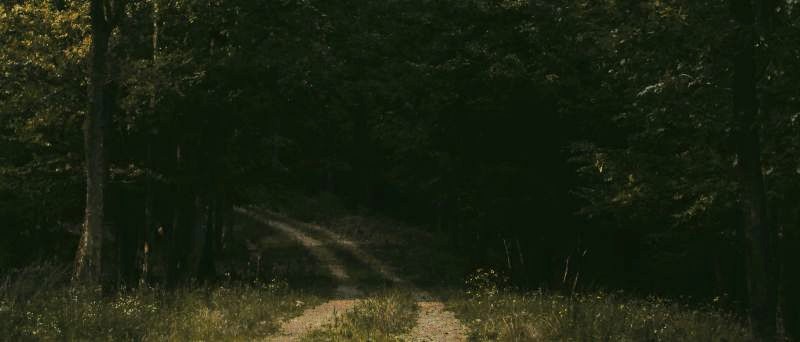
Honey Branch, not unlike other parts of rural Appalachia, has a paradoxically bittersweet character. Home to rugged mountains, babbling creeks, thick foliage and various wildlife, the natural beauty and quiet stillness of the holler recall a simpler time. It is only five minutes away from St. Paul, Virginia, a small town whose revitalization has focused on rural tourism like kayaking and ATV trails. To those of us who lived on the branch, though, there is a haunting darkness, one that mirrors the shady side of the holler in the afternoons when the sun is at its zenith—a darkness so impenetrable that virtually no light gets through.
The darkness is in the broke-down singlewides with tires on the roof and cars on cinderblocks in the yard. It is in the people who have their good teeth pulled on purpose so they can get prescription painkillers. It is in the people who don’t have any teeth anymore because they couldn’t afford to go to the dentist. The darkness lurks in the corners of broken homes, where children are whipped so hard they can’t sit down, and mothers pray they can afford to keep the lights on. That darkness is so heavy and thick; it has weighed down generations. Sometimes, the darkness creeps out in Bible verses and curses alike, both admonitions to people unsure if they’re living right despite trying to make it the best way they know how. The darkness is everywhere. It spreads in guilt and shame and dysfunction. And somehow, the little white house on Honey Branch withstood it longer than most, and never quite succumbed to its grip—not entirely, anyway.
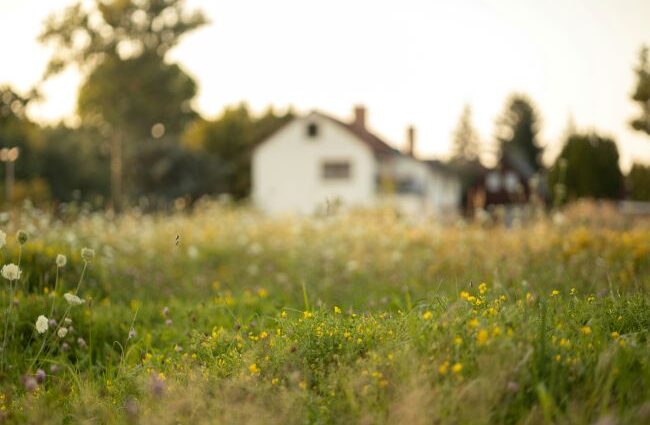
My mother used to tell people it was the first white house on the left after the bridge, about five-tenths of a mile. It was a grand home at one time. Built in the late 1930s, it was first owned by my great-grandmother and her husband, who added on to the home before passing it down to my mother, father, and me, almost fifty years later. I was two years old when we moved in, so it is the only house I remember. My pink-carpeted bedroom was the warmest room in the house. Originally the kitchen, after the addition, it was surrounded on all four sides by other rooms, with no windows directly to the outside. It was safe, like a cocoon.
The hardwood floors throughout the house creaked with every step, and the outside glass of the double-paned kitchen window had less than a foot of space separating it from the jagged side of the mountain through which Honey Branch had been carved. The darkness that surrounded the little house enveloped it like a nest.

People have said that a kitchen is the heart of a home, and I guess that is true, because my mother was the heart of our home, and she was always in the kitchen. Countless mouths were fed: family, friends, and foes alike. Her bacon gravy was inimitable and her Saturday breakfasts, legendary. In Appalachia, food is a love language, a language of care, concern and inquiry, and my mother was fluent.
When my mother died, she took the whole damn house with her. First, the dryer quit putting out heat and just spun aimlessly whenever it felt like it, clothes or no clothes. That summer, Daddy had to put everything out on a line. Next, the microwave gave up its greasy ghost in the fall with a flashbang pop and a flat “no” to his TV dinners. Winter wasn’t too bad, except for the basement floodings that took out the washing machine. A few months later, in the spring, the refrigerator started bawling in the middle of the night, leaking sticky tears from the icemaker that pooled in the kitchen floor like grief. Piece by piece, the house started to break down without her, and so did we.
When Daddy died, broke down took on a new meaning. The kitchen was one of the first rooms we emptied. Instead of my mother’s gravy bowls and blue-ribbon-winning jars of jam, we carried out nebulizers, shotgun shells, flashlights, pocketknives, and Mason jars full of wheat pennies. The sparkling clean tabletop was replaced with towers of gun parts, bills, and empty Mountain Dew cans. The family table where we sat and shared for decades had been reduced to a catch-all; it was the first stop to empty his pockets when he came in the back door, and therefore, was his landing strip. This, coupled with a living room flanked by mismatched couches and a workshop full of tools and scraps, comprised the space my father inhabited after mom died. If it wasn’t in these rooms, he didn’t need it.
Approximately two inches of dust covered the double bed they shared for 36 of their 39 married years, where mom’s purse was still parked after she died her first night in residential rehab. He had brought the purse home the next day, helpless, and sat it atop of her folded clothes on the bed. It would stay that way for half a decade, until I had a new mattress and bedding shipped to him. He never slept in the bed again, even though I begged him to. He preferred the less saggy of the two couches in the living room, with the television blaring badly dubbed martial arts movies on the “Hi-Yah!” channel.
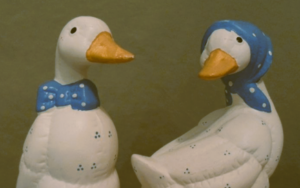
Mother was lace and frills and Daddy was practical. Nothing in that house matched anything else because it was clearly a his and hers operation. She wanted everything to be Victorian, with cabbage roses and tassels and trim, and he preferred the stylings of Mossy Oak and red or navy bandanas. At one time, in the early 1990s, the living room fell victim to the trend of white ducks wearing cornflower blue bows on their necks. My parents had gone to Ball Brothers and bought a matching sofa and loveseat, new wallpaper, and a giant oil painting that would forever define the color scheme in there as country blue and brown. I remember spilling root beer from a glass bottle in the living room once and feeling relieved that the carpet was dirt brown, which surely saved me an ass beating.
Over the years, the little white house on Honey Branch staged elaborate Christmas schemes and legendary sleepovers with my school friends and cousins. Kids who rode the school bus on Honey Branch always talked about the seasonal décor that my parents hung outside for Halloween and Christmas, which was always showcased by strung hanging lights. The installation of these lights led to Daddy cussing and nearly falling from precarious heights on the same ladder he used every year; despite this, my mother’s face lit up the brightest of all with childlike joy. Once, I remember watching a Barbara Walters interview on television in which she asked her guest what kind of tree they would be if they were a tree. “You’d be a damn Christmas tree,” Daddy said to Mother, and she heartily agreed.
One of mother’s favorite parts of the house were the French doors that closed off the formal living room from an odd central room we always just called “the hall,” even though it was a square room that had five doorways that led to other rooms. These were original to the house, and they were gorgeous mahogany with five glass panes each. I would pretend it was a ballroom, going into the opulently decorated living room and closing those French doors with gusto, as if I were going somewhere fancy and secluded, and I would play records on the stereo that had red velvet speakers.
I didn’t know we were poor.
Both of my parents worked full time, and I had everything I needed and most of what I wanted—so it wasn’t until I was an adult living independently that I realized how hard my parents worked for us to survive. No matter how we struggled, we were clean and styled, and our home was always immaculate. My mother cleaned it religiously on the weekends and maintained particularly rigorous standards. She knew how lucky we were to have this home, and she worked tirelessly to care for it. My father took pride in it, too. On his days off, he cared for the yard and did general maintenance and upkeep, and every season brought coats of new paint and touch-ups throughout. Some of my favorite days were spent during our annual spring cleaning, when mother took down the lacy drapes to be washed and let sunshine and fresh air in all around the house, threw the Victrola open wide, and we danced through the hall with dusts mops and cans of Pledge.
With a medical grade face mask and dish gloves on, I peeled soiled curtains from the windows and tossed out molded books and papers. Expired canned food filled the cabinets. Boxes of labeled file folders, water bills from decades past, and Ziploc bags filled with funeral programs from relatives long gone were all chucked into trash bags. Above me in the kitchen, half the ceiling tiles were missing, and the wood beams and insulation were exposed. Beneath me, the linoleum sagged wetly and threatened to give way. The shame I felt from seeing the house in its dilapidated state let me know the darkness of the holler finally had its greedy hands around my throat. No happy memories on VHS tape or perfectly posed school photographs that I dug up could hide the poverty, the depression, the death in that house.
It is a peculiar form of grief, mourning a childhood that I alone can remember. With both of my parents deceased, there are entire years of memories in my head that belonged to us, and now, only belong to me. It is surreal, recalling so clearly those now-precious moments of everyday happenings and understanding that they only exist in my mind—their realness fades with the understanding that the other two people in these recollections do not exist outside of them: the fluorescent lights above the kitchen sink that cast a shine on the dining table after it was cleared, the dust cloud of talcum powder after Mother’s nightly shower that crept down the hall, the hum-buzz-bleep-screech of the police scanner by Daddy’s bedside table, the solitary glare of the lone streetlight eaten up with gnats on summer nights, and the deafening silence of snow drifts on both sides of the creek in winter, so thick and still.
The darkness has not yet stolen these memories from me, but every night for the past month, I have lain awake, thinking of my final days in that house. The faded wallpaper and paint where my school photos hung, and the familiar creak of the wooden floors threatened to suffocate me. Hot tears run down my face as I think of the gaping holes in the ceiling, the yellowed tiles spread like a fault line from room to room. Bag after bag of trash and debris, mold, dust, and rot traversed a morbid assembly line out the door to be hauled to the dump, among it precious tokens maintained with love that wounded me deeply to see, to touch.

Among them was a letter from my mother’s former employer, the Department of Rehabilitative Services, congratulating her on my birth and assuring her that if she wanted to return to work, they would gladly hire her back. Yet another was a box of drawings from kindergarten friends who sent well wishes when I was hospitalized for a week with pneumonia during my first year of school. There were report cards, notes home from teachers, school awards, trophies, and cut-out corners of newspapers and such. All this evidence of a little life I had lived and that they had watched lovingly from the sidelines crushed me. It would have hurt me less to be crushed by falling rocks from the mountain than to be confronted with so much love. The weight of that love, the realness of it, the tangible evidence of it, was incomprehensible to me. It was then that I knew no other person in life would or could ever love me like my parents did. That love was overflowing and it filled the little white house from room to room.
Thinking about the rotted floors and the sagging ceiling, I consoled myself that the house had finally burst from all the love it could no longer hold. There was no place else for that love to go anymore, now that the darkness had finally come for it. The darkness, that proverbial entity that threatened to take everything away from me that makes me who I am, had already taken so much. It couldn’t take this, too. It couldn’t take my home.
I didn’t dance like Mitchell and I didn’t bid the house goodbye. Instead, I limped away from it, defeated, shamed, afraid, weak. It took everything I had to even face it, now that it was emptied of decades of memories and literal piles of filth. Part of me dreaded listing the home online because I didn’t want people in town seeing the inside, gawking over the realtor’s photos and feeling like they had a front-row seat to the worst days of my life. They couldn’t peer into the rooms with hazy nostalgia.
I did have to tell the house goodbye–but I did so, in my own way, by admitting to myself it was not the home I once knew and therefore, could not be my home any longer. Up went the “For Sale” sign. Two taps and the stakes were in the ground. My journey home started with losing her; it ended with losing him. So, it made sense, then, to sell the house and never look back.
It’s true what they say. You can never go home again.
Home is a slice of forever that lives in memories, and we carry it with us wherever we go, like a pocket handkerchief, in case a glimpse of it starts to spill from our eyes.
Stephanie Tolliver Hyman, Ed.D. is proud of her Appalachian heritage. A twenty-year higher education veteran, she has taught English composition and literature at various institutions in the southeast. Her favorite genre is memoir, and her poetry, creative nonfiction, and scholarly research have been published both in print and online. She is married to her best friend, and they share an adult daughter and two spoiled cats.
**Featured image credit: Lara John—Unsplash
Stephanie, this is beautiful. Reminded me of cleaning out our dad’s house & the last walk my sister & I took around the house & yard, crying the whole time. So many memories that you & we will carry forever. Our family is so thankful to have you & Harper as part of us. Mr. Steve (I was the only one allowed to call him that 😊) & Pam were such good people, We love you all very much & glad Cory has you both. ❤️❤️