Tellico Plains, Tennessee
July, 2017
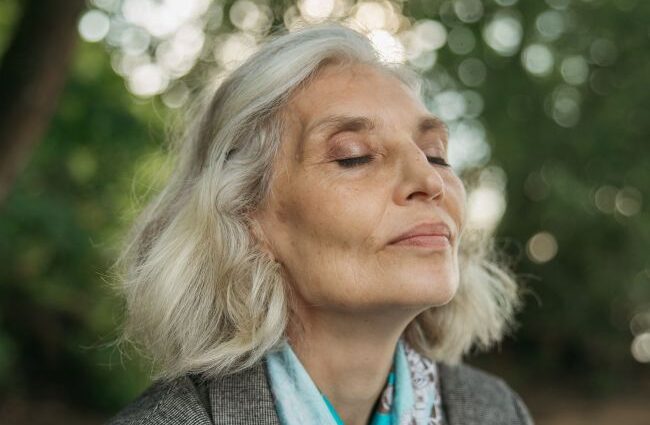
Momma is beautiful.
She doesn’t know it, but I think she suspects it.
“Your hair looks great,” I say.
She runs her fingers—arthritis-bent from decades of factory sewing—through her gray waves.
“It’s gettin’ long,” she says.
“Makes you look young,” I say, smiling.
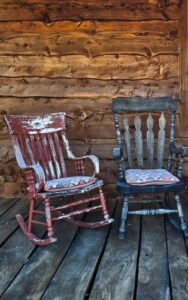
Momma is seventy-six, and she’s beautiful, sitting on her porch on a July evening in the handmade rocking chair Daddy bought her for Christmas when I was seven. The chair’s been chewed by hounds, baked by the summer sun, washed by spring rains, and frozen by wind-blown snow, but it’s still there, still giving comfort to my mother, even after Dad’s been gone for over sixteen years.
We sit on her front porch in the dusky dark, and she rocks and listens to me talk about work. She may not fully understand everything I say, the self-appreciative terminology professors use, but she understands her son. I sometimes get the feeling that she’s listening past what I’m actually saying, looking for signs of the me she knows; the me she raised in these fields and hollers. So, every now and then, I throw in something to show her that I’m still here.
“You got a nice compliment the other day,” I tell her. “I held the door at a gas station for a lady with an armload of drinks, and she said ‘What a nice young man you are. You must’ve had a good momma.’”
She grins.
“What’d you tell her?”
“I said ‘Maam, I sure did.’”
It’s hot out here on the porch, but it doesn’t seem right to be indoors on such a pretty evening, so she sits in her rocker on the porch, and I sit in one of her plastic chairs, blabbing non-stop about everything except what I really need to talk about. Mom seems to sense it.
“You like your new job at the college down there in Georgia?” she asks me.
“I sure do!” I say, a little too eagerly.
I can feel her brown eyes on me as I stare off into the trees.
“Why you lookin’ at me like that?” I ask her.
“I’m just waitin’ for you to tell me the truth,” she says.
“How do you always know when I’m lyin’?” I ask her, laughing.
“‘Cause I’m your momma.”
I shake my head and spit over the rail of the porch.
“Well, if I have to tell the truth, I’m kinda havin’ a hard time,” I tell her.
“What is it you’re havin’ such a hard time with?”
For some reason it’s difficult to put what I’ve been feeling into words.
“I don’t know,” I say. “It’s a hard job.”
“Hard ain’t nothin’ to you,” she says, “the way you was raised on this farm.”
“It ain’t the work, really,” I tell her. “It’s less actual work than bein’ a principal.”
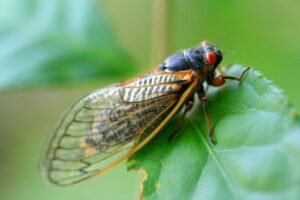
The jar flies drone from the trees around us.
“It’s hard startin’ over,” she says.
“And it’s lonely, bein’ away from everybody I know.”
“It’s early yet,” she says, her voice soft. “You’ll make friends in a little while.”
“I feel like it’s gettin’ harder to make friends,” I tell her. “It’s mighty lonesome at times.”
“I know about lonesome,” she says, “since your daddy died.”
“It’s more than that, though,” I tell her. “The whole place . . . it just ain’t a pleasant place to be.”
“You talkin’ about where you live?” she asks.
“No, I like Rome. I’m talkin’ about the college. It’s a Christian school, you know. They make us all go to church.”
“There ain’t nothin’ wrong with goin’ to church,” she says.
“Well. Let’s just say they believe some things I don’t agree with.”
Mom picks up her fly swatter and fans with it as she rocks.
“Some folks at church believe different from me,” she tells me, “but I just let it go. That’s between them and the Lord.”
“If they tried to force you to believe the same as them, what would you do?” I ask her.
She grins.
“I’d tell ‘em to go jump in a lake,” she says.
A turkey vulture glides smoothly into sight overhead. His wings shudder as he catches an air current, and we watch as he sails silently away toward Starr Mountain.
“I’m just scared, Momma,” I say reluctantly. “They got all these rules that ain’t written down, and you don’t even know they’re rules ‘til you break ‘em. The other day I got scolded for talkin’ about Forrest Gump in class. My boss told me ‘We’re Christians at Shorter University. If you’re talkin’ about a movie, it better be G-rated.’”
“You got in trouble for that?” Momma asks.
“That’s just one example,” I say. “I could tell you a half-dozen others off the top of my head.”
I’m sure her next question comes hard, because her voice is uncharacteristically soft when she asks it.
“Did you know all this before you went down there?”
I have to nod.
“I just didn’t think it would be as bad as it is,” I say. “I feel like they’re watchin’ me all the time, like they’re waitin’ to fire me.”
She rocks.
“Reckon . . .” she says.
I look at her.
“Reckon what?”
“Reckon you feelin’ like this has more to do with Shorter University, or with what you just come through two years ago?”
“That’s a good question,” I tell her with a chuckle. “I’ll have to think about that for a while.”
My mind runs back to 2015, as it does constantly, and the end of my days as principal of Sequoyah High School, when I was accused of allowing students to vandalize the school as part of a senior prank.
“I’m still mad at that superintendent,” Mom says, “lettin’ you go the way he did. He knows you didn’t let the kids mess up that school. And then to put it all over the news like that. And that police officer that was supposed to be watchin’ the school that night. He’s the one that let the kids in; not you.”
“He was just a kid himself,” I say.
“He was a police officer,” she replies. “He was supposed to know better.”
My smile is faint.
“That’s all water under the bridge,” I say.
“Everything that goes under the bridge washes up somewhere,” she says.
I nod and look away.
“Maybe I’m just homesick,” I tell her.
“Don’t worry about this place,” she says. “This place’ll be here when you need it.”
“What ain’t sold off,” I say.
“Well,” she says, “there ain’t nothin’ to be done about that.”
I look at the fields and the forested ridges, the blue sky and the gathering shadows.
“This place is who I am,” I say.
She looks at me and her eyes are soft.
“It’s who you were,” she says.
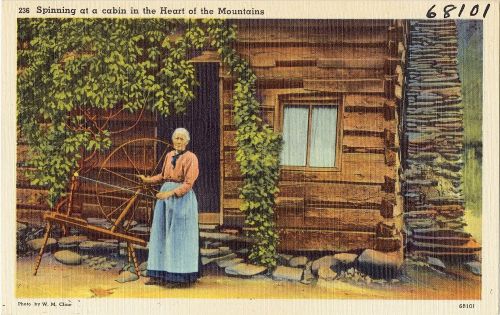
My momma’s a mountain woman, and if she ain’t, there ain’t no such thing. She was born and raised in the deepest holler on Rafter Mountain, where the air stays damp and mossy. Down in that dark holler, her mother, my Mammaw Josie, took an axe and built a cabin for herself and her children, including the one she carried in her belly.
All of a sudden there’s a noise high up in the oaks, and a cool wind roars down from the mountains and races up the valley to envelope us. She turns her face to the wind, and her wavy gray hair moves as she smiles and sighs.
“Aaaahhhh,” she says dreamily. “There’s us a breeze.”
I watch with a smile as the unexpected July breeze caresses her face. “There’s us a breeze,” she whispers.
In my mind, I see her as a young girl, playing in the creek on the mountain, the way she says they did in the summers. I see her in that holler, so young she cannot imagine sitting on a porch in her late seventies with her forty-two-year-old son. I see my momma, dark-haired and freckle-faced, standing knee-deep in the creek with her brothers and sisters. A rogue breeze slips over the ridge and down the valley, and they all stop at once as the cool gust enfolds them, turning their young faces to the wind, back in a time when air conditioning did not exist on Rafter Mountain. I see Mom in the summer of the year, and the summer of her life, with her youthful face turned to the cool wind and I hear her say “Aaaaahhh . . . there’s us a breeze,” and I love her even more than I did before.
Her grandchildren, my nieces and nephews, love and respect her, but they also poke a little fun at her. They smile at the old country sayings she uses, the misunderstandings she has of modern terminology, and they imitate her when she’s not watching.
Last Christmas, while cooking breakfast with my sisters, she told a story that got us all torn up. Her half-hound Duke used to be the boss of the place, but he’s getting older, so my cousin Amp’s young bird dog has started coming up the valley to launch full frontal assaults on him. And Momma can’t stand it!
“I come out on the porch the other day,” she told us as she stirred the gravy. “It was such a purty day, and I stood by the porch rail drinkin’ coffee out of my mug Gen brought me. That mongrel of Amp’s come tearin’ up in the yard straight for Duke, and him not doin’ nothin’ but layin’ there by the porch steps. I got so mad I rared back and whizzed my coffee mug and caught him right between the eyes! He took off yappin’ and I ain’t seen him around here since!”
Everyone roared with laughter, except Gen.
“I wondered if that was that purty mug I bought you in Pigeon Forge layin’ out there in pieces,” she said.
Mom looked at her seriously.
“Well,” she said, “if I’d’ve had somethin’ else to whiz at him, I’d’ve whizzed it!”
For the rest of the day, “whiz” was the word among the family. When a gift changed hands, it was whizzed. If a cup turned over, it whizzed. Every time someone drove up or down the road past Mom’s house, they were whizzing. And every time it was said, everyone laughed.
After one particular “whiz” reference, in the midst of the laughter, I glanced over at my smiling momma, sitting with a plate of gravy and biscuits on her lap. There she sat, smiling sweetly as we all laughed, and I realized she had no idea why we were laughing. I suddenly felt very ashamed of myself, and more than a little mad at my family.
Just as I was about to say something rude, though, my niece Amellia brought her mammaw a glass of orange juice without being asked. My nephew David, returning to his seat after dropping his plate in the sink, paused to give his mammaw a smooch and hug. Megan and Daniel ran water in the sink to wash the dishes, while Zach and Alex gathered her presents and placed them around her, so they’d be easier for her to reach. In that moment, I realized their laughter was not a sign of ridicule, but an outward showing of the love, respect, and admiration they felt for their mountain mammaw. And I knew the word “whiz” would become a legacy for them to pass down to their children in just this way, as it had probably passed to her from my mammaw Josie.
That memory and a thousand more pass through my mind as we sit silently on her porch. As I’ve gotten older, I’ve learned it’s never awkward to sit quietly with your momma once you’re grown. I look at her face, her eyes closed, head back against that old chair, and as I look at her face, I know the elegance I see was hard-earned.
The breeze dies down and she opens her eyes.
“Now YOU’RE lookin’ at ME funny” she says.
I turn my gaze to the tater patch below the house, neglected and overgrown since Dad died, and shake my head.
“No use worryin’ about it,” she says. “It’s just time.”
“Time?” I ask.
“Yep. Time’s gettin’ the tater patch.”
I sit quietly for a minute.
“It gets everything, I guess.”
She nods.
“It gets farms, and woods, and fields, too,” she says. “And ways of livin’.”
“And jobs,” I say, “and reputations. And friendships.”
She rocks.
“Son,” she says, so softly it might be the breeze through the sassafras sprouts in the tater patch, “it’s done with. You got to quit worryin’ about it.”
On the wooded hill above the patch, I see a mature white oak lying on its side, its green leaves wilting in the heat.
“Looks like one of our white oaks blew over,” I say. “The deer will be sad for that come September.”
“Three or four of your cousins said they’d cut it for firewood, but they ain’t a one of them showed up.”
I laugh. We like to talk about how lazy our relatives are, whether it’s true or not.
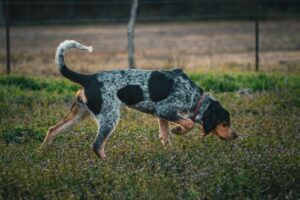
“You remember that time ol’ Blue Boy got loose?” I ask her.
“Which time? That hound wouldn’t stay in a pen. You’d put him up and he’d beat you back to the porch.”
I laugh.
“I’m talking about the time I couldn’t find him for three days. We drove all the way to Madisonville asking people if they’d seen him. Then I finally found him over on the back side of the farm in that deep gully. He’d run a possum in a hole and got his collar twisted up in the roots. He got in a bind where he couldn’t dig, and he couldn’t go forward or back, and he’d barked till he’d lost his voice.”
Mom looks at me.
“You remember that?” I ask her, and my voice falters.
She puts her hand on mine and looks in my eyes, like we only do at the most important times.
“Dogs ain’t people,” she says. “A dog gets stuck and ain’t got the sense to get unstuck. A grown man, he’s got to get hisself loose. Ain’t nobody comin’ to cut the roots out of your collar and carry you home. You got to do it yourself.”
I nod and fight the urge to cry.
“Remember,” she tells me, “the chances of somethin’ good happenin’ are the same as somethin’ bad. Maybe even better.”
“I hope so,” I tell her. “Life is . . . hard.”
“Yes it is,” she says. “It’s hard for ever’body.”
“Does it get easier as you get older?” I ask her.
She laughs.
“I ain’t tellin’ you,” she says. “You’ll have to wait and see.”
A butterfly floats in on the wind and lights on the porch rail. He sits there flexing his gray-brown wings slowly.
“Hey there pretty thing,” Momma says, in that voice she uses to talk to babies and puppies. “You just set there and rest a minute.”
Her warmth is hard to resist.
“He’s got to catch his breath,” I say. “He’s rode that wind off Starr Mountain, I bet.”
“You don’t see many that color,” she says. “He’s the prettiest one I’ve seen in a long time.”
All at once, the butterfly flits his wings and rises from the rail. He turns to face us and hangs there a moment before gliding away with the breeze toward the east.
“Thanks for stoppin’ by,” I say as he sails out of sight.
“He’s going up to Jeffrey’s Hell,” she tells me, “to the big patches of laurel.”
“He might be headed up to Rafter,” I say, “to where you were raised.”
Momma looks thoughtful.
“One time when I’s a little girl, we was walkin’ into town, Mom and us girls. We got about halfway down Rafter Road, and a butterfly just like that one came down and lit right on my shoulder, pretty as you please. I laughed and Mom turned around. She told me ‘If you bite that butterfly’s head off, you’ll get a new dress the same color.’”
“What?!” I exclaim, laughing.
She laughs too, and her gray locks shake down over her forehead. She brushes them back.
“That’s what she told me. One of them old sayin’s of hers.”
“Did you do it?” I ask.
She looks appalled.
“They Lord no!” she says. “I wouldn’t bite no butterfly! Though the Lord knows I coulda used a new dress!”
“I remember Mammaw saying the fog on the mountains was rabbits makin’ coffee,” I say.
“She was full of things like that,” she says. “Old mountain tales and superstitions. The best one she told was if you swept the house after dark, it’d bring werewolves out.”
“Werewolves?” I ask. “That’s a good ‘un.”
She nods.
“But that ‘un about butterflies is pretty good too!”
The breeze shifts and comes in from the direction of the river. It carries the scent of ancient water and history, and I think of all the miles between here, where my soul lives, and Georgia, where my body lives. I wish it didn’t make me sad to come; and I wish it didn’t make me sad to leave.
Mom holds my hand and rocks. There in the midst of our histories, with her son on the porch in the sweltering summer, she closes her eyes and says “Aaaaahhhh. There’s us a breeze.”
As the sun drops behind the shaggy treetops on the ridge, she begins to sing in that voice of hers that sounds like the summer wind searching through the sassafras sprouts:
Cheer up, my brother.
Live in the sunshine.
We’ll understand it,
All by and by.
William Gary Cole is an educator, poet, and author, born and raised in the mountains of East Tennessee.
**Featured image credit: Anastasia Shuraeva — Pexels, cropped
So glad that you put this on Facebook! I did enjoy it! What a talent you have. I am proud to know you and Amberly and y’all are great neighbors!
Momma and I are the same age!😂
I enjoyed this piece so much. I hope you are at peace with your work.