Horace Watts kept close eyes on his family, as they drifted down Wolf Creek, on their cobbled-together raft made of deadfall tree limbs. Despite the many trials and tribulations they had faced, before reaching this location, Horace had maintained the essence of his name: patient, composed, and able to make thoughtful decisions based on long-term goals. His wife, Abby, was snuggling with their four children and feeding them some cold stewed squirrel meat, cooked on their last fire. As their raft drifted westward, Horace reflected on their long journey: fleeing the insanity of King Charles I, his reckless misbehavior, his depredations against the peasants of Devonshire, his marriage to a French princess, and engagements in countless wars, leading to his demands that all non-believers, peasants or otherwise, be exiled from Devonshire. Among those people were Horace and his family. Horace spoke with many other landholders, who gave him only a few shillings for his prosperous farmlands, knowing they would only be praised by King Charles for removing the unwanted ones from his Kingdom. In 1634, Horace spent some of those shillings, obtaining passage on a ship to the New World, for Abby and his children. Months at sea, housed in the lower deck of the ship, caused their two children to suffer the quinsy. After a long layover in the Bahamas, where Horace did manual labor to feed his family, he spent few more shillings and obtained a muzzle-loading rifle from a local man. Horace was a good shooter, having harvested pigeons, geese, and other game with his left-behind musket, to supplement their meager farm earnings.
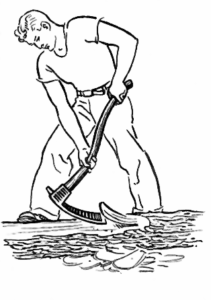
On December 7th, 1641, they disembarked in Virginia. Some refugees on board remained in Virginia, while some moved northward, and others south. Horace and his family moved westward, wishing to be as far as possible from the depredations of the King. Horace well remembered telling Abby, when they disembarked, that no King would ever find them! As they roamed westward, they passed through a couple of settlements and a few hamlets. Abby birthed twin boys in one of the hamlets, and they stayed there until it was safe to travel. Far beyond any settlements, they were stunned at seeing the looming mountains. Deciding they were too weary to keep walking with their four children, they saw a small river, far below, and decided to build a raft and drift onward. They were startled by the silent approach of a Shawnee tribesman, who spoke only a few words of English. He told them about Wolf Creek, warning them to be careful of the predators along its icy length. He soon disappeared, and they never saw him again. As they drifted westward, along the creek, their cobbled-together raft suddenly stopped moving. After checking first on Abby and the children, Horace tied their raft to a tree. They looked around. North above them loomed a 1,000-foot-high wall of snow, leading to a distant mountain top. To their south was a very steep incline, trending to the south, bounded on both sides by forests. Horace, calm as always, loaded his muzzle-loader rifle, just in case, then gathered some deadfall tree branches, and built a roaring fire on the riverbank. Abby and his family huddled by the fire while Horace looked all around, watching for predators. Having only an axe, an adze, and a handsaw for tools, Horace created a lean-to shelter on the steep incline, and they snuggled up for several days, as Horace harvested some wild game for food. After several days, they decide to climb that mountain, to see what might be at the top.
Horace estimates the hillside’s angle is 45 degrees! It takes a long time, carrying a bag of cold food, keeping eyes on the older children, and carrying the little ones, not yet able to walk on their own. Having finally arrived, they see a slightly rounded field, almost like a dinner plate turned over, but about twenty acres of arable land with space for a house and barn, sometime in their future. He tells Abby, nursing the twins, that so many nearby trees will let him build a small cabin. It won’t be as cozy as their old cottage in England, but he can keep making improvements, a bit at a time. They will have to huddle-up in the lean-to he built, down below, while he lugs his tools up the mountain, and starts on their cabin. Using flint and a striker, he starts a small fire, and Abby warms up their cold food. Once done, they go down to the lean-to. He leaves the muzzle-loader with Abby and begins lugging his tools up the mountain.
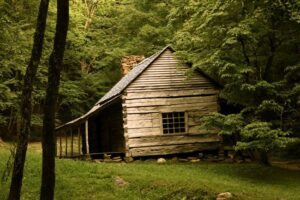
A month later, they inhabit their log cabin, gaps in the logs caulked with mud and wood chips. Horace even managed to build a hearth inside, with the many stones he had gathered from the open area. Never one to waste, he even fetched-up the remains of their lean-to, lengths of rope, and other, possibly useful, items. Never having seen another human being since homesteading, Horace garbs-up in his warmest clothes and takes a long hike up the steep hillside, leading eastward. Leaving the muzzle-loader with Abby, he is extra-wary, as he searches for any neighbors. After four days, he finally encounters another person, walking along a muddy two-track, while hunting for wild turkeys. They soon become friendly, and Horace learns a bit more about the local area. Hiking back to their new cabin, Horace finally recognizes the trees on the mile-long descent. He remembers them from England: It’s a large grove of chestnut trees, and he starts thinking about, someday, using them to build a barn on their arable land. Just on a whim, he names it the “Chestnut Orchard.”
The years, inexorably, roll onward. Dirt roads are formed, all around the area. Small towns and villages appear, railroads are created, small schoolhouses constructed, which Horace and Abby’s descendants attend, by riding horseback, whenever the enormous annual winter snowfall allows them to do so. Horace and Abby’s descendants replace the original log cabin, by building a larger and better home.
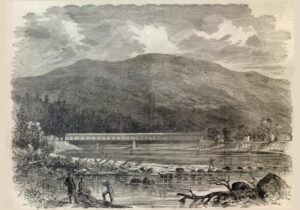
Then, the Civil War arrives. A battle takes place, south of their home, near a village named Rowlesburg. The railroad is the target of the Confederate Army, as the railroads being constructed all over the country are the lifelines to planned battles, offering rapid transportation of soldiers, munitions, and food supplies. But they lose the battle and retreat, while no soldiers of either side appear near their isolated mountaintop home. The descendants of Horace and Abby serve in both the Union and Confederate armies.
Many years later, when Horace’s succeeding first male descendants, all named Horace to honor him, the brothers who fought on opposite sides, are faced with a dilemma—who should inherit the farm and its many acres of arable land? They consult carefully, with each other, then make a very difficult decision: a young man, Peter Watts, only fifteen years old at the end of the Civil War in 1865, should take ownership. They escort him, from Charleston, West Virginia, to the farm, hauling his few possessions, and items they’ve donated to him, in a horse-drawn wagon, to his new home on the mountaintop. They dig a new well, erect a small shack, and school him in basic farming techniques, promising to return later and build him a barn, using trees from the orchard of chestnut trees far up the dirt track access to his new home. They stay with him for three weeks, complete his small shack, and give him a good horse, a plow, and numerous other useful tools; then, build a small stable to shelter his horse. Using the horse and plow, they grade the mile-long access track to the chestnut orchard, finally departing to their own farms and families.
A few years later, Peter is riding his horse along the dirt track, north of the chestnut orchard, when he meets a neighboring farmer. Seated on his wagon are his wife and family. The lovely daughter, Essie, catches Peter’s eye. Six months later, they are married and living on Peter’s farm, and he immediately upgrades his shack into a real house. He names their first son Horace, to honor his ancient forbear. Sixty years have passed since the Civil War, with automobiles finally appearing on the dirt roads above the farm. Wanting a car, but needing a tractor, and not having money for both, he buys an old Ford tractor. A wise decision, such as the original Horace would have made. The tractor helps him double his crops that year, and every following year. He soon buys an old used Ford Sedan. He and Essie, though nearly eighty-years-old, can roam about, visiting neighbors, their few grandchildren still nearby, and attend social gatherings. Most of their children and great-grandchildren, with the advent of paved highways and modern cars, have moved onward seeking new lives of their own, from the Catskill Mountains all the way south to the Great Smoky Mountains, and always loving Appalachia.
A few more years pass by and Peter and Essie no longer drive about the area. Neither feels safe, while trying to drive. Neighbors and a few great-grandchildren drop in, make them lunch or dinner, and handle routine chores, now too difficult to perform. They spend their days relaxing in their rockers on the front porch and reminiscing, Peter often cooking their simple meals. One balmy evening, a full moon rising, they are laughing about reaching their ninetieth birthdays, when the moonlight is outdone by countless headlights descending the mile-long two-track from the tarred gravel county road, nearly blinding their aged eyes. It looks like the string of headlights reaches clear to the county road! When the line of vehicles reaches the open area opposite their house, the lights go off, and Peter and Essie are swarmed by family members, some of whom they’ve not seen in a very long time! Among them: a doctor, two lawyers, several school teachers, small business owners, retired military veterans, college-aged young adults, and many small children. One of the vehicles is towing a trailer, holding a huge and unknown piece of equipment. Nearly hugged to death, before being reseated in their rockers, they’re finally told what will be happening. Their oldest grandson, Josh, and his wife, Estelle, start speaking for all the others:
“We are moving here, from our farm in Tennessee. We will continue to grow crops to earn you more money. We will handle all the daily chores and tend to your needs, whatever they might be.
“That piece of equipment you see on its trailer has a lift crane, a backhoe, a powerful bandsaw, and other equipment. Your great-grandson, Tommy, owns a private bank in Charleston. He is tied up, while purchasing another bank, or he would have been here with us. He leased the equipment, and, starting early tomorrow, we are going to erect that barn dreamed about by the original Horace Watts, using timber from the Chestnut Orchard. If all goes as planned, we will erect it in just one day! It’s supposed to be very hot tomorrow, so we have a small awning to shelter you. We’ll brew some sweet tea, and you can relax in the shade while watching.
“We also brought with us a scientist from the Department of Agriculture, who took a core sample, from one of the chestnut trees we will be harvesting for your barn. He’s already enroute to his lab, hoping to find a cure for the blight that has killed countless millions of chestnut trees.
“So, time for bed. Tomorrow will be a long day, and we want the two of you ready to watch and enjoy the barn-raising.”

Absolutely amazed, Peter and Essie are assisted to their bedroom, and fall asleep, almost instantly. Estelle gently awakens them early in the morning and feeds them a down-home breakfast to begin the day, then assists them to the already set-up awning, where two cushioned chairs are waiting. They watch the huge machine climb the mile-long access road to the Chestnut Orchard, and soon hear a low power saw screaming, in the silent morning. The monstrous machine soon appears, dragging six chestnut trees, their branches removed. It releases the trees, and its backhoe begins digging holes, down to the underlying rock. Six holes, and less than two hours later, the machine begins sawing and slicing the fifty-foot trunks, until perfectly square, then uses its lift crane to place the trunks in the drilled openings. Several of their visiting family members check the alignment to be sure the trunks are perfectly vertical, then nail cross-pieces in place. They hear other power saws, and a tractor hauls the pre-cut roof beams to the barn. The lift crane puts men in place, and they soon have the barn’s rafters secured. Standing terne metal roofing is already enroute, per Josh. Scads of little ones keep their glasses of sweet tea filled, and fetch them treats to eat, prepared by Estelle. Two hours later, Peter and Essie hear a roaring diesel engine, then turn, and watch a semi-tractor and trailer descending the long access road, piles of gray metal stacked on the trailer. The lift crane hoists the sheets up to the roof beams, and several family men overlap them and hammer them into place. Josh walks over, and updates them:
“Several of us, who live nearby, will be back here next week to finish the interior, the hayloft, level the sod floor, and build pens for cows and pigs. For now, the barn is secure from foul weather. Once I cut the hay, and it’s dry, a contractor will be here with his baling machine, and we can fill the hayloft. If your great-grandchildren play in the hayloft and damage the bales of hay, then we will give them the spankings they deserve, including our kids!”

The long day finished, Estelle, holding their hands, walks them to their bedroom, where they recline on their bed, holding hands. Estelle gives them a goodnight hug and tells them she will cook their breakfast whenever they are ready, blows out the kerosene lamp, and leaves quietly. Morning comes, and Estelle enters Peter and Essie’s bedroom, prepared to let them sleep if they do not respond to her whispered “good morning.” She is not ready for what she sees: They are holding hands, and seem not to be breathing! Estelle checks their pulses, and they are, indeed, dead. Laying on the bedside table is a sheet of paper, signed by both of them. It is their last will and testament, deeding their fertile mountain lands, to Estelle and her husband, Josh. Unable to control her emotions, she sheds tears, crying quietly, then realizes that she must share the sad tidings. She covers their bodies lying on their goose down mattress, and walks quietly, in search of her husband. She finds him, sipping a cup of coffee and looking at a notepad, while also looking at the barn’s sod floor. Estelle, still crying, shares the sad news with Josh. He is equally devastated, but recovers:
“They were able to see a dream fulfilled, Estelle, from centuries ago, when Horace envisioned the barn we’ve built, using the Chestnut Orchard. They lived a long and happy life, remembering the history of this mountaintop. They realized they were about to die, but made the effort to ensure that their inherited legacy would live on. We will complete the barn, obtain cattle, and work hard to make this farm the envy of all their neighbors and friends, then pass on their legacy to the next generation, to honor them.”
They hold hands, and walk about the mountaintop, thinking of the future they face.
The End
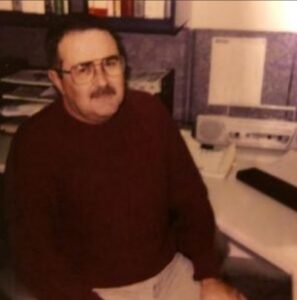 Delmar R. Knotts’s paternal family settled in the mountains of Preston County, West Virginia, in 1700. Delmar was born in Keyser, West Virgina. His father was a coal miner. Delmar has hiked and driven Appalachia from West Virginia to southern Tennessee. His story “Mountain Memories” about the Dolly Sods Wilderness was previously published in Appalachia Bare. Delmar is the author of Hell’s Derecho and Exigent Circumstances. His newly published novel The Raypairman centers in West Virginia.
Click on the images below to find out more about Delmar Knotts’ books:
This gallery is not published.
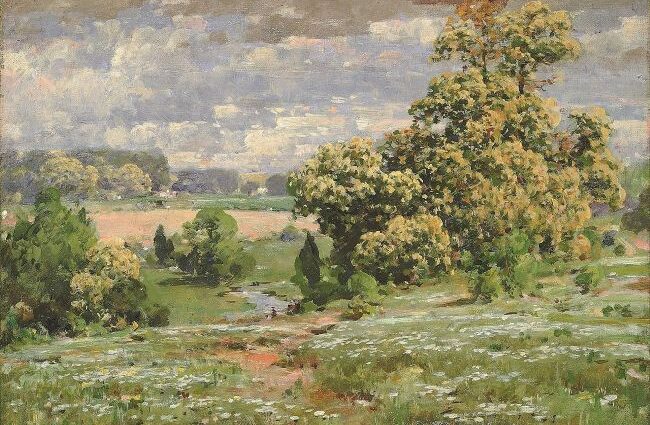
**Featured image credit: Chestnut Trees in Bloom oil painting by William Henry Holmes, date unknown; Smithsonian #10647 – Wikimedia, pub dom