
“Callie. . .are you there? I hate these damn things. So old-fashioned, and I don’t have your new cell number. Well, listen, I’ve got great news, and I’m so happy I don’t mind telling it to a machine. Leonard finally did it. He asked me to marry him! Lord, it only took him eight years. He is running his Daddy’s store now, and we’re gonna build a house on the lot next to his parents. And guess what else? You’re the maid of honor, just like we talked about in high school. Call me, Callie.”
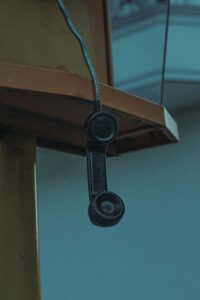
Carolyn lay her violin case on the table in the dim Pittsburgh apartment. She hadn’t heard from her cousin Crystal in nearly two years. The East Tennessee accent grated against her ears like a badly out-of-tune chord, but she smiled at the thought of her cousin herding Leonard down the aisle. She leaned against the arm of the couch and waited for the other messages. Only a few people still called her landline, which she kept forgetting to cancel.
“Carolyn, Rabbi Danziger here. I’m calling regarding our conversation last Friday. I was impressed with your certainty, but I want to give you time to look deeply at the reasons for your decision. That’s why I am suggesting a delay before we begin studying. We can talk more tonight. I trust I will see you and Danny at Temple as usual.”
Carolyn frowned; waiting was not part of her plan. She hoped one of the remaining messages was the rabbi saying he had reconsidered. But at the first syllable, she knew the caller was her mother. She slumped onto the couch, legs draped over the arm.
“Callie, this is your momma. I just got your email about that friend you’re bringing for the holidays. Well, I’m glad to see you have finally come around. I knew that last email I sent would hit home. Your Daddy is poorly, no two ways about it. The way you’ve acted since you moved up to Pittsburgh for that symphony is a disgrace. Like someone who’s got no family. But that’s water under the bridge, as they say. You’re coming home, and we’ll have a real Thanksgiving.
“And that friend of yours sounds all right—an engineer. Better than those hippies you dated in college. I’m glad you never brought one of them home. You’d give your Mammaw a heart attack for sure.”
Carolyn sighed and opened her eyes. For three years, she had lived in this apartment on the North Side, where she awoke to a perfect view of the city’s skyscrapers and bridges through her third-floor picture window. She spent her days giving music lessons and her evenings playing the violin in the Pittsburgh Symphony Orchestra. At every performance she marveled at the beauty of Heinz Hall and her good fortune in being an orchestra member. But somehow her mother’s voice made all that seem pointless, even selfish. The phone in her pocket buzzed, and she pulled it out to check the text. It was from Danny.
“Getting ready 2 leave. Meet me at Mom and Dad’s b4 Temple.” The text ended with a heart emoji and a ring emoji. He wanted to tell his parents about their plans to get married at dinner tonight.
Carolyn was nervous about it. She knew his parents liked her, but she also knew how important maintaining a Jewish home and family was to them. She got up to get ready to go, but then she heard static from the answering machine—another message. The sweet sound of the mountain dulcimer joined with a banjo and fiddle in what used to be her trademark ballad, “Knoxville Girl.”
I met a little girl in Knoxville, a town you all know well.
Every Sunday evening, into her home I’d dwell.
I took her for an evening walk, ‘bout a mile from town.
I picked a stick up off the ground and knocked that fair girl down.
The music went on, and Carolyn’s mind went back to her fifth birthday when her Grandpa had put a dulcimer in her lap and watched her eyes as she strummed and listened to the beautiful sound. She sat up and reached for the dusty dulcimer case on the bookshelf, taking out the instrument to play along with the tape.
Holding the dulcimer on her lap always comforted Carolyn. The violin, held close to her cheek, was her lover. But the dulcimer was her child.
It had been a sweet childhood. She had started singing and playing the dulcimer with her Grandpa’s band as a novelty when she was six but soon became the main attraction. His partner, John Lee, had taught her the basics of fiddling. And the audience always asked for “Knoxville Girl” because Knoxville was where they played most often.
She had loved the stomping, rowdy crowds at the country bars where they played. Off-stage, everyone treated her like their favorite little sister. And on-stage, she felt a power most children never feel. She could make them all happy, make them yell and clap. And then, at the end of the night, she could quiet them down again with “Knoxville Girl.”
Momma had complained: “Getting too big for her britches, out there fanning around at all hours. I don’t know what you’re thinking, Daddy. I ought to forbid her to go with you anymore. She’s getting as briggity as they come.”
Momma would carry on that way until Grandpa took her aside and cajoled her. Then she would come back into the room, shaking her head and saying, “All right, Miss Callie, one more chance, but it’s for your Grandpa’s sake. And you’d best have all your chores done, or you won’t be going to any show at all.”
Momma had been happy when she dropped out of her Grandpa’s band at fifteen. Of course, she gave Doug all the credit. Doug Johnson was the high school music teacher who had just arrived from New York and had a love affair with Appalachian music. He also was an accomplished violinist, and when he saw Callie and the band one night, he insisted on taking her on as a violin student.
Keeping up with Doug’s lessons, her schoolwork, and the band was too much, so Callie quit the band, temporarily, and spent most of her time practicing the fundamentals on which Doug insisted. He was unteaching all of her bad habits, he said.
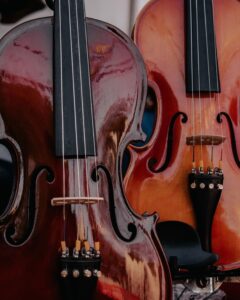
What had started as an apprenticeship turned into a love-hate relationship when Doug’s love for the music got mixed up with Callie when she was sixteen. Their affair lasted one year. When it started, it made her feel worldly. By the time it was nearly over, she felt like a puppet, doing and saying whatever Doug wanted. In a fit of rebellion, she had deserted him to study classical music with a professor at the University of Tennessee. That decision had saved her life, she believed. The music had method, structure, and reason. It was a whole world unto itself. She could lose herself in it and practiced for hours every day, eventually winning a scholarship to the Cincinnati Conservatory of Music.
Her parents couldn’t understand her refusal to play Appalachian music on the fiddle after that—or why she started going by her full name, Carolyn, when she moved to Cincinnati. And she couldn’t explain that fiddling was too bound up in lies and secrecy and Doug, so she split in two—mountain music on the dulcimer and classics on the violin.
It was her own voice on the answering machine tape—her Grandpa’s band. And the chords of the ballad took her back to a time before she knew what a movement was in a musical score, when she thought music was just the accompaniment to a story, and not the story itself.
Carolyn knew it had to be Doug who had played that song on her answering machine. Just before she had left Tennessee for good, he had pressed a CD of her Grandpa’s band into her hand and warned, “Don’t forget where you come from.”
She put down the dulcimer and walked to the window. Night was falling, and the city lights drew a shining outline of Pittsburgh that dimmed the stars. In them, she could see the diamonds of the ring that Danny would buy her, the candles she would light on the Jewish Sabbath. The view blurred, and the music played on.
Go there, go there, you Knoxville girl, this dark and lonely night.
Go there, go there, little Knoxville girl, you’ll never be my wife.
Leigh Ann Roman is a native of Eastern Kentucky who makes her home in Memphis, Tennessee. Her fiction has appeared in Appalachia Bare and Ligurian Magazine. Her creative non-fiction has appeared in Appalachian Heritage and Faith West Tennessee. She writes a faith-based Substack called Continuing Conversion.
**Featured image credit: Elise Bunting from Pexels