At the parade of The Muses during Mardi Gras, the drunk students of Tulane discovered my family were the wrong kind of white people. About an hour before the parades were to start, we found a spot between two Black families. In my family’s typical Appalachian style, we had become temporary friends with these families. We shared our life stories as we waited for the parade to begin. We were excited to be at our first Mardi Gras parade. The local families beside us gave us tips about the culture and what to expect. It started as great fun, but as it got later in the evening white people in their 20s started darting across the street between floats and marching bands wanting to get . . . somewhere. And in the sea of black and brown faces, they picked the white family as the spot to get through the crowd.
What kind of fools try to cross the street during a parade and push through the crowd to reach more bars? They were knocking down old people, upending revelers off step ladders, and causing children to stumble into the paths of floats. My husband, son and I decided that we were going to stand our ground. At one point I reached up, put my hands on each side of a man’s face and said,
“Look into my eyes. No. You cannot get through here. It is blocked by stepladders and light poles. No. Move down to the corner, you feckin eejit.”
After about an hour of successfully refusing to budge, someone tapped on my shoulder and asked,
“Who are you? You are a vibe. How can you just stand up to people?”
I told her we were Appalachian hillbillies. However, that is a contested identity these days. What makes one an Appalachian hillbilly?
Who Am I?
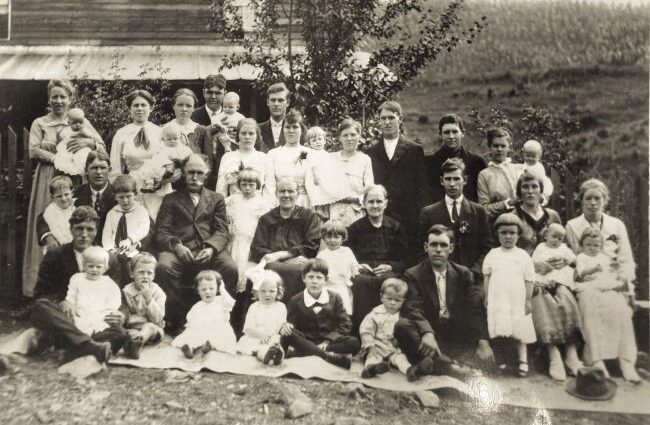
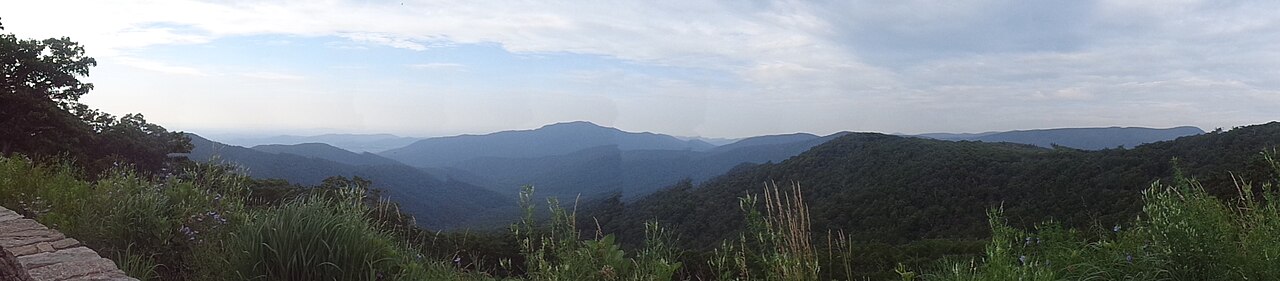
My roots are an unending line of English, Scots, and Germans. In the 1650s, Thomas Meadow Sr. emigrated to Virginia from Bristol, England. In the mid-1700s Josiah Meadows settled in the Thorofare Mountain area of the Blue Ridge. On February 4th, 1886, his descendant Leonard Warfield Meadows married Etta V. Eppard. Their twelfth child was my great-grandfather Cleadus Alfred Meadows, born April 29th 1909, when his mother was 40. He married Clarice Jeanette Pace in 1926. The third of their nine children was Doris Valentine, my grandmother. During the 1930s the extended Meadows family was displaced to form the Shenandoah National Park. Their land became part of the Skyline Drive near Luray, Virginia. They moved to the valley and hollers.
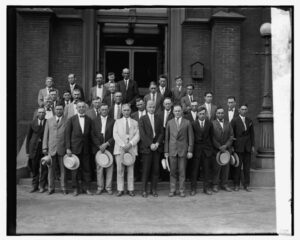
I am the daughter of a farmer. My father is the son of a plant worker/farmer and the grandson of farmers stretching back to colonial times. I grew up with a mom who kept a huge garden, canned vegetables, and wove baskets. I have over 150 known relatives living within an hour of my home.
I ran free through the woods with my siblings, guarded by a border collie who chased off any bears or snakes in our path. We spun out on our ATVs as we sped down long dirt roads. I can bait a hook. I’ve seen a hog be butchered and a turkey beheaded. I punched a bully behind the Little League dugout. I don’t mind getting dirty. I learned to be fearless.
How do you imagine me? Who do you think I am? How do you imagine my great-grandparents up on the mountain. What are they wearing? What does their house look like? Imagine my life. What comes to mind?
Poor? Racist? Uneducated? Isolated? Uncultured? Hillbillies and Rednecks? We need to break down that narrative. My lived experience is not your stereotype.
Poor.
There is history of extreme poverty among my great-grandparents. Just not the ones you would think. Not the ones from the mountains. The people up on Thorofare Mountain were considered wealthy. The Leonard Meadows family had a 200-acre farm. Etta Eppard’s family’s holdings spanned 3,000 acres, with large frame houses, a sawmill, orchards, and farms. Of course, it was all taken to form the national park. The narrative that was used to justify condemning and seizing property was that the people living in the mountains were illiterate with no religious/social organization. They were destitute and lived in tiny mud and log cabins. I imagine a few may have fit this stereotype. But not on the Thorofare. My great-great grandparents were heartbroken, and I doubt they received a fair price for their land and resources. But even after losing their homes, they remained at least middle-class economically.
My father started his agribusiness in debt. He worked his way up the economic ladder. Every five years we moved up a rung. I may have come home from the hospital to a mobile home, but when I left for college at eighteen, we were solidly upper middle class. My father was managing three small farms and a rental property business. It does not fit the stereotype, but there are wealthy people with deep Appalachian roots who still hold onto their cultural ties.
Racist.
Like any family that has lived in Virginia since colonial times, my stories vary when it comes to issues of race. None of my ancestors from up on the mountain fought for the Confederacy. In their words, “This is not our fight.” Because the mountains were a place where you could be left alone to build your community; there are hollers that have been home to African Americans since colonial times. We have been a community for a long time. A big difference I have noticed is that rural areas are not as segregated, at least not like larger cities. For example, when I lived in Richmond, Virginia, and when I visited large cities, it was clear that there was a “White grocery store” and a “Black grocery store.” This is not the case here. There are not enough people per square mile for there to be that kind of segregation.
I grew up in Rockingham County. It is not the most racially diverse area, but it is not the least. The county is 92% White, 3 percent Black, with 10% of the population identifying as Hispanic. The main city of Harrisonburg is 64% White, 8% Black, 15% multiple races, with 24% identifying as Hispanic. From 1990 to 2000 the Hispanic population in Harrisonburg, Virginia, and the surrounding counties grew by 400%. During the summers of the early 2000s I worked at a local photography store that provided immigration visa photos. Using my high school Spanish, I tried to ask a customer why they chose to settle in a rural mountain valley in Virginia. I managed to understand three words: trabajo, verde, simpática. Work. Green. Friendly. They came for the same reason my family moved here in the 17th century: work and land.
Don’t get me wrong, people from minority cultures who live in this area experience racism. Black farmers are weary of being pulled over because their truck is too nice. I am privileged that it is not part of my daily life. I didn’t see it very much growing up because it was clear that my family and friends were not the type of people someone could be racist around. Racists know where it is safe to show their ugliness. It is not socially acceptable in the South to be racist; it shows a lack of moral character and upbringing. Racist people are met with condemnation and disdain. In my 50 years on this earth, I have only heard the n-word twice in the wild. My grandfather’s foster mother developed dementia and believed that someone was stealing her non-existent chickens. A great-uncle drank too much beer and offered me a Brazil nut in the shell. The room was appalled. Hands were clapped over children’s ears. Also, if you called a Black Appalachian a slur someone would 100% beat your ass. It might be the Black person themselves; it might be a friend. It might be months later, when someone will randomly kick your ass and say, “That was for DeShawn.”
Uneducated.
I am fourth-generation college educated on my mother’s side and second generation on my father’s. My great-grandmother, grandmother, and mother all attended James Madison University.
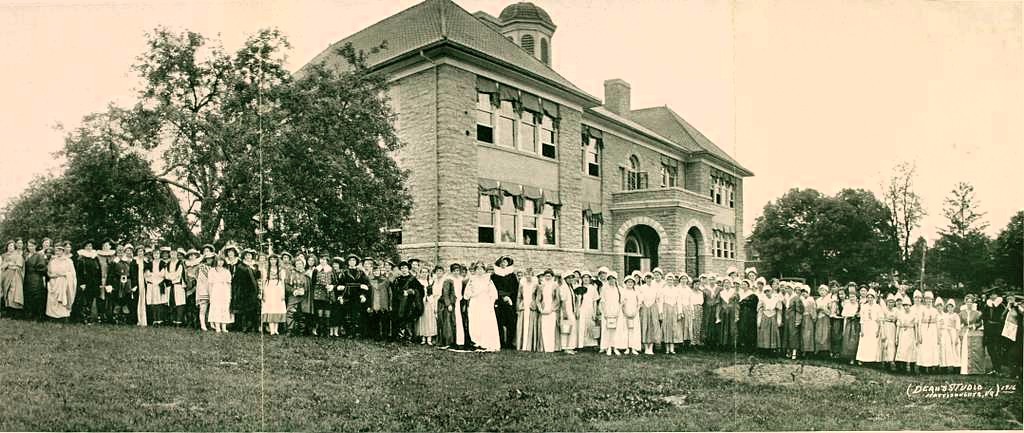
My grandmother Doris has a master’s degree in education from the University of Virginia. Great-grandmother Clarice did not grow up in the mountain. She came there as a teacher. There was a school. According to her, the children of mountain families all attended. She boarded with Leonard and Etta Meadows, who were literate and had a basic education, along with being self-taught. Sixty-eight percent of the descendants of Cleadus and Clarice Meadows hold degrees beyond a high school education. I have a PhD in educational psychology. My family is not uneducated. A normal range of intelligence exists here. Like anywhere.
Isolated and Uncultured.
People from rural communities are often seen as unsophisticated. One of the justifications for the displacement of families from the Shenandoah National Park was that they were backwards and lacked modern values. There is a difference between being unsophisticated and being uninterested. Don’t assume that people choose to remain in rural areas because they don’t know what they are missing or are not aware of other choices. Television programming has reached every home since the 1960s. The last 30 years of the internet has flattened the world (although much of rural America remains under-served). Everyone knows what’s out in the world, but for many it is unappealing. Most of my family enjoys travel, but they were never interested in moving from the Shenandoah Valley. It would be difficult to find a more beautiful, natural area than the mountains of Appalachia. That beauty is our wealth and culture.
How Can I Stand Up to People?
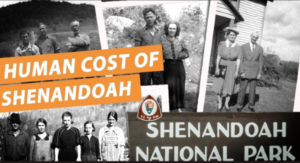
People with roots in Appalachia are taught to stand up to people because we haven’t forgotten what was taken from us. It is a huge region, but each major area has been pushed too far too often, with little agency or choice. For those in coal country, they lost their land to coercion, resource speculation, and railroad land use laws. They then found themselves bound in poverty to serve an industry that exploited that land. For my community it was the creation of the Shenandoah National Park from over 3,000 individual tracks of land. No one had a choice. The narrative was that it was for our own good to raise the area out of poverty and ignorance. Yes, there were people who were poor. There were people who were illiterate. But remember, the poor have rights as well. Everyone was displaced. Most importantly, many people were not fairly compensated for what they gave up.
Long before Elon Musk erroneously claimed that the descendants of Scots-Irish immigrants were the true Americans or James David Vance published his childhood memoir, the idea of the hillbilly has been used to promote a specific world view. It is one in which the needs of industrialization outweigh any concerns about the value of preserving a community and the natural beauty of the land that sustains it. We have learned the hard way that no industry can be an economic good if it does not respect your rights. First it was lumber, then coal, and now the data centers of the information age. These rights include both preserving the environmental stability of one’s home and being able to prosper as a result of what is occurring in one’s own community. The push for computing hubs with their high need for water and energy does not seem to honor those rights. It keeps happening. Therefore, we never stop teaching our children to stand their ground.
Real Appalachia.
My family, with our degrees and accomplishments, are every bit as Appalachian as anyone else from the area. Rich and poor. From multiple ethnic backgrounds. With higher education credentials or not. Whether you have been here for 400 years or newly immigrated. We are here together as a unified community. We live with a deep connection to the land and rich human connections that sustain us. The area has always been home to a diverse range of people who count on a culture of mutual support. The key traits that bond the people of this area together are community connections, resilience, self-motivation and love of the land. It is a culture that transcends economic, educational, and ethnic boundaries. It is an identity worthy of standing one’s ground.
Erin Morris Miller is an educational psychologist, writer, and poet from the Shenandoah Valley of Virginia.
**Featured image: Leonard Warfield Meadows and Etta Eppard Meadows family photograph courtesy of Erin Morris Miller.