Few events in my life have impacted me as much as Hurricane Helene. I was living in Boone, North Carolina, when the storm hit. It was a scary night; my roommate and I slept in the living room because the branches were crashing so loudly on the tin roof upstairs. We woke up to realize we didn’t have power or water. The following days of reading the news and talking to community members revealed how lucky we were for electricity to be our only worry. Even a year and a half later, I have more thoughts, emotions, and stories from those weeks of immediate storm recovery than I could ever put fully into words. I think a lot about the people I never would have met if the hurricane hadn’t happened. I still have images burned into my brain of homes, just down the road from my own, washed into bridges or completely gone. I think about the neighbors I wish I had gotten to know before disaster necessitated it. I think the most about my friend, Kate. She was an older woman, maybe in her 60s, who lived just over the Tennessee line in Trade. I first met her a couple weeks after the storm, when a small group of volunteers from Stateline Resource Station came to help her clean out her house. She received an ovarian cancer diagnosis the day before Helene hit. A medical advocate & counselor was doing home check-ins and called us in for help.
This gallery is not published.Her doublewide was a difficult site to see. The building itself took in significant flooding, with mud, rocks, and debris washed all the way up to her porch. Neighbors’ cars were stranded in her front yard after floating down the river and crashing into each other. Her home overlooked a farm pasture; there was an old barn and cows wandering over rolling hills. It was beautiful even after the flood damage, and I know it must have been even more so before. I only met Kate a handful of times—on that first visit, a few volunteers and I were tasked with cleaning out her fridge. She was still at the hospital on the day Helene hit and came home a few days later to find all that flood damage and no power. You could tell she was embarrassed by the state of her home—reluctant to ask for the help she so clearly needed. Power outages and a full refrigerator do not make for a pleasant combination. The smell was almost too much to stomach. We knew that a lot more work was needed, but we did what we could in the moment, alleviating at least some of the rotting by clearing out old food and as much of the trash as we could fit in a truck. I came back a few times throughout the month of October with a few other volunteers and friends willing to help.
Every time we cleaned, we’d see just how much more there was to do. She lived with quickly growing mold from the mud washed up under the house. Her water and electricity went off and back on and off again for weeks. Only months later, when we finally moved out her furniture, did we realize how bad the electrical damage was. The burn marks shooting up from the outlets indicated a real fire hazard, to say the least. It simply wasn’t a livable home anymore, but it was all Kate had. Her mother and sister lived in South Georgia. She had already been planning to move to Georgia soon to take care of her aging mother. I remember Kate explaining that, after her cancer diagnosis, “now my mother will be taking care of me.”
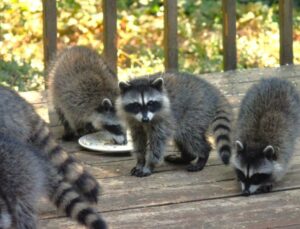
On one of the early visits, she told my friend and I how worried she was about the raccoons she used to feed off her porch because she hadn’t seen them since the flood. She cared so much for the animals in her life. Her best friend, Dee, took in her dog after she got the diagnosis. While Kate was still living in that house, she kept feeding her cats that came in and out through her window, as well as any other animal that wandered by the plates of food she kept outside. Her neighbors were supposed to be looking after her cats while she was in and out of the hospital, but they had clearly just been topping off the food and litter box without ever cleaning anything up. Sadly, these were not trustworthy people—they continuously took advantage of Kate, doing the bare minimum or less than the tasks she paid them for and rifling through her belongings while she was gone. We had to chain and padlock her generator to the deck railing to make sure nobody took it. I can’t imagine taking advantage of a sick woman living in a flooded home, but I also can’t imagine being in so desperate a position as they were—to them, it probably felt like their only resort.
I hadn’t seen Kate in a while when I got another text from her in January, asking if I remembered the code to a lock on her storage unit that we helped move some of her things into. She said she was in a desperate situation with her health and needed to pack up and move as soon as possible. She didn’t care about most of her belongings—she kept trying to give away her furniture pieces and appliances to anyone who came by to help. We took a few things and donated what we could. Over the next couple of weeks, we sorted through and set aside anything that seemed valuable—mostly of the sentimental variety. The items that struck me the most were embroidery projects, fridge magnets with funny quotes or names of cities across the country, photos and graduation cards of people I can only assume are her loved ones. Kate made the move down to Georgia, and we kept in contact as we tried to clear out the last of her house, working with her friend, Dee, who still lived in Boone. Dee let me know on Saturday, February 9th, that Kate passed away. She requested not to have a service. In the short time I knew her, Kate never wanted any sort of big fuss to be made about herself.
Listing out all the horrible things that happened during Kate’s last few months feels distasteful to her memory, even though all of them are true. She was dealt a rough hand. I won’t say she was optimistic—I think she knew her circumstances. But she maintained a certain kindness, an acceptance of her situation and an appreciation for the small things that brought her comfort and happiness. We did what we could for her, but I know it wasn’t enough. I could go on about the hell that her landlady gave us, and worse, that she gave Kate’s mother after her passing, but I don’t think that does any good for Kate now. I knew her for such a short period of time, but I think about her often. In all the chaos of moving her things, I ended up accidentally keeping the extra key to Kate’s storage unit. I still carry it on my keychain as a reminder of the woman who impacted me so profoundly, likely without realizing it. I still only know so little about her – I don’t even know what she did for a living, what her hobbies were, or what brought her to live in Trade. What I do know is that she deserved better.
Every time I was at her house, I kept thinking about how easily she could be any of us. I think about how my grandmother lived alone in East Tennessee for years before she moved in with my aunt, and how something like this could have happened to her just as likely as it happened to Kate. I remember the first time I met Dee to bring her some of Kate’s things, and Dee told me with tears in her eyes, “She’s my best friend. I would do anything for her.” I don’t know exactly how long they knew each other, but Dee talked about her as if it was a very long time. I think of my own closest friends and how devastating it would be to watch them go through something like this—to only be able to help so much. I spoke to Kate’s mother—a very sharp Southern woman. We connected over both being Georgia girls, and I promised to visit her when I am home next summer. She reminds me fondly of so many women in my family. I only got to see a snapshot of Kate’s life, of the people that love her, but I know how dearly she is remembered by her closest friends, by her family, and by me and every helper who met her towards the end.
Kate’s story is one of many. Everyone who was impacted by Helene knows someone like Kate—someone whose life was devastated, changed, or taken by the storm. Kate’s misfortune represents so many facets of our infrastructure that let her slip through the cracks—the medical staff that ignored her severe pain for months before finally diagnosing her cancer, the underfunded disaster response, the housing and economic crisis that kept her living in such horrible conditions and kept her landlord desperate to cover up the damage and get it rented out again. But she was more than a statistic about flood damage and failed medical systems. She was sweet, witty, and generous.
I’ve spent the past year wondering what I could’ve done differently, wishing I had talked to her more often—called her just to talk and not only when she needed something urgently. I hope we at least brought her some comfort in her last few months; we tried to take the worry off her own shoulders, but she carried a lot of it. How many more Kates are out there? What can I do for them? I don’t pray much these days, but on one of the last days I saw her, I told Kate that I would pray for her, and I did. I don’t know what Kate’s exact faith was, but what else could I do? Everything we gave her felt too little and too late. Reaching out to a higher power didn’t stop the events that caused Kate’s suffering, but maybe it eased her pain as she lived through them.
While writing this, I looked up Kate’s obituary for the first time. I found out that she was raised in the Berkshire Mountains in upstate New York. I spent this past summer working in that area. I could tell how deeply Kate appreciated the natural beauty around her little house in Trade, Tennessee—I’m sure that she got her love of the mountains from her childhood. I like to think that we admired many of the same views—the same mountain ranges, rivers, and sunsets from upstate New York to East Tennessee. The hollers that fill these regions are full of people like her—humble, loving, and overlooked people.
I dislike saying that the hurricane ‘taught’ me anything, as if that makes the tragedy of it all okay just because I learned a personal lesson. But in a world where natural disasters are becoming more frequent than a once-in-a-lifetime event, I’ve stored away a few teachings for the future. One of these is a renewed conviction to get to know your neighbors—your community members, especially those who you may feel have nothing in common with you. All we have in this world are the people near us. I don’t ever want to live through a disaster again but if and when I do, I want to know I can count on the people in my community and that they can count on me. I don’t know how to stop the next storm, but I do know that we can sort through the mud and make each others’ burdens a little bit lighter.
Kathleen McBride is a theatrical costume artist from Marietta, Georgia. She has deep family connections to East Tennessee and the surrounding areas of Southern Appalachia. She currently travels with her work and has called many places home. One of her most special homes was Boone, NC, where she lived for a couple of years and witnessed the devastation and aftermath of Hurricane Helene. One of her goals is to share the beauty of the culture and community that she found in Appalachia everywhere she goes.
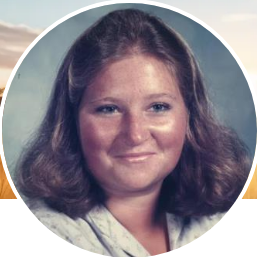
Kathryn “Kate” Julia Combs
For more information about how to help with the continuing recovery effort, visit State Line Resource at https://www.statelineresourcestation.org/#/.
**Featured image credit: Tori Wise, Unsplash
Creative Commons link: Deed – Attribution 2.0 Generic – Creative Commons
Katherine Kate Julia Combs image from Watson-Hunt Funeral Home
Thank you for your thoughtful piece and for telling Kate’s story. Helene was devastating to many individuals, like Kate, who were struggling even before the storm. We were fortunate that our home in Asheville, NC, on a hill out of the flood plain, was spared. We joined a number of clean-ups, led by MountainTrue, on the French Broad and Swannanoa Rivers. MountainTrue eventually hired a full-time work crew that continued to clean tons of debris from the banks and river waters. Unfortunately, the contract will end in January with much work left to do.